Saturday, December 3, 2016

Adding a dollop or two of pickle is an Indian habit which transcends regions and states.  It is part and parcel of the Indian diet and the simultaneous melding of sweet, sour and spicy tastes add new flavor dimensions to any food.

It is a rarely known fact that pickling is a method of preservation that can be traced back to India. It is believed to have originated 4,000 to 5,000 years ago. The hot Indian summers meant water scarcity and consequently food production went down during summers. This gave rise to the need to preserve excess food grown in winter.

The art of making pickles, or achaar as it is called in India, was traditionally passed down through families by word of mouth. These days commercial pickles are readily available, but they almost never match up to the taste of homemade pickles.

Indian pickles are made from any variety of vegetables such as gherkin, bitter gourd, carrots, cauliflower, ginger, garlic, onion, jack-fruit and much more. Mixed vegetable pickle is also very common and is one of the most popular varieties in India.  Apart from these, there are also several un-ripened fruits which are pickled, including mango, gooseberry, tamarind and lemon. Some regions also pickles leafy greens while other places pickle chicken, fish, prawns and mutton too.
 Unlike western pickle, Indian pickle is not just ingredients preserved in brine. Indian pickling requires the ingredients to be first sun-dried thoroughly. Often salt is added to hasten the process of sun-drying. The sun-dried ingredients are then rubbed with dry spices and chili and bottled. The bottled stuff is topped with a lot of oil and then sun-dried some more
.
There are some pickle recipes which cook the spices and raw ingredients together instead of following the sun drying method. In fact, most commercial pickles are made by cooking. This saves a lot of time, but it compromises on the taste. Sadly, due to time constraints, more and more families rely on commercial pickles these days. But, if you do get a chance to try out homemade Indian pickles, do not miss it. It’s a spice explosion that will leave your taste buds tickling for days.


A word of caution though; pickles are high in oil and salt and should be avoided by people who are diabetic, high blood pressure, acidity and gastritis. 
Everyone knows that Indian weddings are large, colorful and have lots of pizzazz. But, quite often the one thing that most people forget to mention is the food.

Food is an essential factor of the great Indian wedding. In fact, food is the essential factor at most Indian celebrations and it intensifies at weddings. Indian weddings often have as many as 15 courses starting with refreshing beverages and ending with desserts. Not just that, in many parts of India it is common to find several types of cuisines at a wedding. So, while you have your basic North Indian and South Indian fare, there are also live pasta counters, Chinese food station, Arabic delicacies and a choice of several Western desserts. Yes, Indian wedding food is lavish!

A surprising point of Indian wedding food is that a lot of it is vegetarian. In fact, in South India, Hindu weddings always have an all vegetarian spread and there can be as many as 100 dishes served at the wedding.

Northern and coastal Indian weddings will include meat, unless the families in question follow a vegetarian lifestyle. So, chicken, lamb and fish will always be there along with vegetarian curries and sides.

Cakes are traditionally not a part of Indian weddings unless it’s a Christian family. But, things are changing and several couples incorporate a cake cutting ceremony into their wedding these days. Not surprising considering that the mithai (sweets) is where the action’s at in Indian weddings. Any wedding worth its salt will have at least 3 varieties of sweets and the count can go up depending on the affluence and generosity of the host.


Calorie counting is not a strong point in any Indian wedding. Actually, it’s not a point at all. If you are invited to a wedding, it is expected that you will stuff yourself and go back home more rounded than when you came in. Anything less, would be an insult to the host! 

Saturday, November 26, 2016

Indian dishes have gained popularity on a worldwide basis. The spicy and healthy Indian food has become favorite of many nations like USA, UK, Australia and other parts of the earth. Many Indian restaurants have also opened up making it easy to experience the Indian taste. But many institutions do not really offer the authentic Indian recipes. Most foreigners are unfamiliar with the traditional cooking methods and unaware of the ingredients and spices used. Cheap Indian restaurant Sydney and in other places sometime just use Indian names in their menu to attract customers. But they are not really Indian dishes as they are not cooked or made in the Indian way.

How to Find the Best Indian Restaurant?

Follow our tips and you will be rewarded with original Indian dishes cooked in the Indian style. Also, experiment around and explore various Indian eateries around town.

Check the Menu

Many Indian restaurants will have a website with their menu. Browse the menu and see what dishes are on offer. Good Indian restaurants will even write the ingredients and details about each dish in their menu. You can compare them with original recipes and get an idea how authentic the restaurant is.

Customer Reviews

The websites sometime feature customer testimonials or reviews. You can also find restaurant review websites where people rate and leave feedback on eateries. Search with the name of the Indian restaurant to find out more about their food. Also, ask your friends around to see if anyone has eaten in that place.

Time taken to Serve

This is a tricky proposition. Many people get irritated and complain of slow service at restaurants. But in truth it takes some time to cook your food freshly not using ready made items. If a restaurant serves special dishes in minutes, something is wrong. Maybe they have prepared curries or ready made sauces which they use to quickly make your dish. But real cooking involves both preparation and care. It takes some time for the chef to present the authentic dish and serve you.
Bonus Tip - Travel to India

A surprising tip! Apart of the beauty of the land, you can taste the original flavor of Indian food. You will be able to make out which Indian restaurant is good or which is cheap Indian restaurant Sydney just by eating their food!
Indian food has earned a favourite place on the global platter. People all over the world are crazy for Indian food and overseas Indian restaurants are really earning a huge profit. But what makes Indian food so popular?

Of course anyone will know that Indian food is delicious and some recipes date back hundreds of years making them exotic and mystifying. But what are the other reasons? Even small Indian restaurants Ryde see a huge crowd of people who are dying for a taste of India. Let’s find out from experts why Indian flavour seems so tempting and irresistible.

Recently celebrity Indian chef Kunal Kapur was caught saying in an interview to a newspaper, “Indian food is gaining a lot of popularity with Indian chefs coming up with unique things abroad. For the Western world, all of these ingredients are, to an extent, alienating. They are very inquisitive to understand what it is.” Kapur has a few cooking shows under his belt, has been a judge in Master Chef America and featured in some travel shows. He also owns his own Indian restaurant in Dubai. He considers it’s the contribution of Indian chefs who are creating a unique fusion and innovative version of traditional and regional Indian recipes and serving them to the outside world.

We also have some interesting insight from Nidhi Mahajan, who recently exited from the show of Master Chef Australia. She had overwhelmed the famous judges of the show with her desi dishes and cooking skill. According to her, "Indian food has made its place on the global platform. People around the world love Indian food for its flavours and versatility.” In the same email interview she cited versatility and history of Indian food for its success. Indian cuisine is huge and, “each dish, each ingredient, has a history behind it and how it became a part of our cuisine," she said. She also viewed higher awareness about Indian food as another cause of its popularity. People are realizing Indian food is not fattening or unhealthy. Daily Indian cuisine is in fact health promoting and not at all oily, hot or time taking to cook.
India is the land of hot and spicy food. Like many countries, fritters are really popular in India and served along tea and drinks or just as appetizers. There are locally known as pakoda or pakora or bhajji. Today we are going to teach you the recipe of 2 quick and lip smacking Indian pakodas or fritters that can be prepared in a short time. It is the great alternative of ordering food from family Indian restaurant Sydney and surprise your guests instantly!

Bengali Onion Fritter

Ingredients
·         2 big onions
·         2 green chilies cut into fine pieces
·         ½ cup gram flour
·         ¼ cup rice flour
·         A pinch of baking soda
·         Salt and chili powder to taste
·         Oil

Process
1. Cut the onion into moderate pieces and add salt to it. Let it sit for 5 to 10 minutes.
2. Take a bowl and add the rice and gram flour, onion, pieces of chili, salt and chili powder and add a little water. Mix well and prevent adding more water and keep the mix semi dry.
3. Heat some oil in a pan and add a small ball of the mix. Add in more and deep fry them till they are brown and crispy.

Cauliflower Fritter

Ingredients
·         1 cauliflower
·         ¾ cup corn flour
·         ¾ cup rice flour
·         2 tablespoon chili powder
·         1 tablespoon cumin powder
·         Salt to taste
·         ¼ tablespoon Asafoetida
·         ¼ tablespoon turmeric powder
·         Oil for deep fry

Process
1. Cut the cauliflower in separate medium sized pieces. Ensure every piece has moderate floret size.
2. Take a big bowl and boil the pieces of cauliflower in salt water. Keep it boiling for 2 minutes, remove it and drain the water.
3. In a bowl put in all the flour, salt and other ingredients. Do not put any water.
4. Now take the cauliflowers and dip it in the powder completely. The pieces will be wet enough to retain the mix. Otherwise sprinkle a little water to make the mix stick to cauliflower pieces.
5. Heat oil in a pan for deep frying. Put the cauliflower pieces one by one and fry till golden brown.

Serving
·         As both items are deep fried, place them on paper napkin to drain extra oil
·         Sprinkle some chat masala on top of them
·         Serve hot with ketchup
You can also try these snacks in a family Indian restaurant Sydney if you are too lazy to make them yourself!

Monday, November 21, 2016

Indian chutneys are more than just a condiment to flavor food. Chutneys have a multi-purpose role in Indian cuisine. They are relishes, they can be main courses and they can act as dessert as well.
The word chutney is an extension of the Hindi word ‘chaatna’ which means to lick which is exactly howb chutneys should be enjoyed. You lick it off your fingers! Chutneys are a flavor bomb with spices and sweet, hot and tart tastes rolled into one. The main flavors range from seriously hot chutneys to sour ones, bitter chutneys and also sweet chutneys.

The original Indian chutneys were made of uncooked fruit ground into a paste with herbs and spices. With time the simple fruit pastes evolved into cooked forms of chutneys with vegetables joining the melee as well. Indian chutneys are meant to be had fresh and are not used as a means of preserving food, as is common in the UK.

A few basic chutneys such as mint or coriander chutneys are well recognised around the world as dips. These hot and flavorful chutneys work as meat sauce as well and add a new dimension of taste to food. Fruit based chutneys are either sweet or a little tart. Sweet chutneys are usually had after meals, as a part of dessert. The tart ones are enjoyed more as a side dish. Savoury chutneys, usually made from vegetables and herbs, are part of the meal itself. It is a tasty way to include greens in your diet.
There is however no hard and fast rule to enjoying chutneys. There are those who love a bit of sweet chutney along with a fiery chicken curry and others who’d rather lick a bowl of tart chutney after their meal, than go for a dessert.

Enjoy the chutney in all its forms for an Indian experience that is unique and delicious!
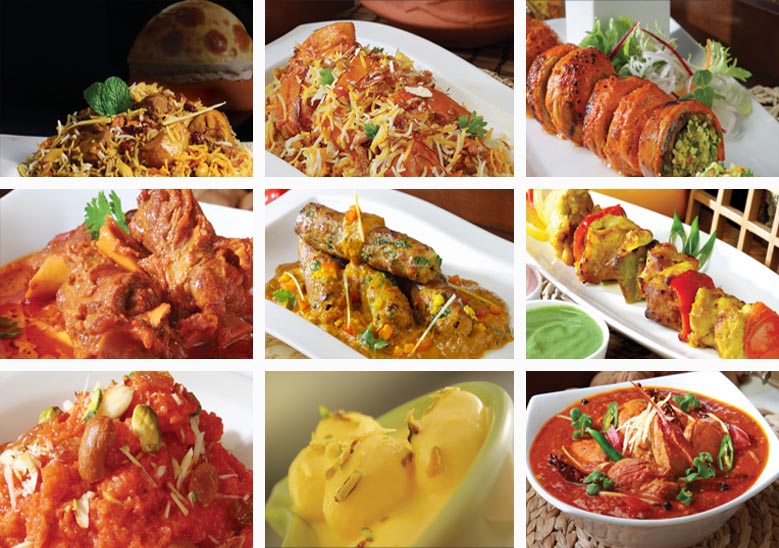
Mughlai cuisine is a rich and fragrant variety of dishes which have their roots in the royal heritage of India. They consist of dishes which originated in the kitchens of the royal Emperors of the country. In fact, most of North Indian cuisine is predominantly influenced by the Mughal style of cooking.

Mughlai is a delicious fusion of Persian cuisine and ancient Indian cuisine. Though the name Mughlai suggests that this cuisine was brought to Indian by the Mughals, it was actually introduced much earlier during the Delhi sultanate period (1206). The Mughal empire, which started with Babar in 1526, reintroduced this cuisine, fused it with existing food traditions and came up with a new style of food which combined Persian style of cooking with Indian ingredients. This fusion food went on to become the Mughlai cuisine as it is known today. Among all Mughlai food, kebabs and biryani are probably the ones which have accrued most popularity worldwide. Some other Mughal influenced dishes include tandoori, koftas, naan, halwa and korma.

Mughlai food is characterized by rich aromatic spices and liberal use of nuts and dried fruits. The tastes may range from mild creamy gravies to hot, spicy flavors. So, while you start off your meal with a hot shorba (soup), the main course can be a spicy tandoori chicken and finish off with a creamy halwa for dessert.

Saffron, cinnamon, nutmeg, cardamom and cloves are the used in almost all the dishes. Gravy bases range from a mix of fried onion and garlic paste to light cream, milk or nut paste. Gravy is usually abundant in Mughlai food, pairing it well with rice or breads.

Although Mughlai food is available throughout most of India, the best Mughlai restaurants are in Northern India, specifically in Delhi and Lucknow.

Food lovers must make it a point to try out Mughlai cuisine at least once in their lifetime. Not only is it steeped in royal history, the food tastes mind-blowingly delicious!